
Life Insurance Corp of India (LIC), which is aiming to launch its initial public offering (IPO) next month, is set to alter the pecking order of top listed companies in the country. Depending upon where the government prices the IPO, the stock could end up becoming India's most valuable company on the first day and even get fast-tracked into global benchmark indices given its sheer size. According to market sources, LIC's IPO is targeting to mop up Rs 63,000 crore and Rs 75,000 crore.


Former NSE managing director (MD) and chief executive officer (CEO) Chitra Ramkrishna and group operating officer and her advisor Anand Subramanian ran a 'money-making scheme' during their stint at the National Stock Exchange (NSE), markets regulator Securities and Exchange Board of India (Sebi) has alleged. The order passed by Sebi dated February 11 highlights frequent increase in the compensation package of without proper appraisal, documentation or file notings, and the involvement of the human resource (HR) head or the nomination and remuneration committee. Furthermore, the order talks about Subramanian being directed to "withdraw and surrender" to the unknown person a gross amount per month as "gratitude".

Life Insurance Corporation (LIC) has received the insurance regulator's nod for time till January-end 2023 to dispose of investments in pension, group and life annuity funds, which do not fall in the "approved investment" category. Had the Insurance Regulatory and Development Authority (Irdai) denied more time to transfer the investments to shareholders' fund at amortised cost, the loss that would have accrued in the profit and loss account (shareholders account) would have been Rs 5,365.83 crore as of September 2021, LIC said in its draft red herring prospectus (DRHP).

This is following revival of demand from the corporate sector and small and medium enterprises (SMEs), even as a nascent economic recovery is taking shape. Credit growth of scheduled commercial banks had accelerated to 9.2 per cent year-on-year (YoY) by the end of December 2021 after breaching the 7 per cent-mark in November, for the first time since April 2020.

'India has many attractive features for the long-term investor; it combines: A low per capita income, a young population, and a heavier presence of high margin, asset-light firms in the technology sector.'
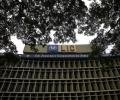
Initial public offering (IPO)-bound Life Insurance Corporation (LIC) of India's assets under management (AUM) increased to Rs 38 trillion as of September 2021, compared with Rs 37 trillion as of March 2021, said sources in the know. Its AUM is almost 3x the AUM of all the private life insurers in the country and over 15x more than the AUM of the second largest life insurer, SBI Life, as of September 2021. SBI Life's AUM was approximately Rs 2.4 trillion as of September 2021, said sources.

In the quarter gone by (Q3 of FY22), private lender HDFC Bank issued around 950,000 credit cards, its highest ever credit card issuance in any single quarter. Since the Reserve Bank of India (RBI) revoked the embargo on it in August 2021 to issue new credit cards, the lender has issued 1.37 million credit cards. This is according to a senior bank executive, who was present in an analysts' call after the lender's Q3 earnings. In Q3, we achieved the highest ever issuance, with 950,000 card issuances.

With Covid-19 cases across the country rising rapidly once again, demand for health insurance products has spiked. Insurers are seeing an uptick in inquiries for such products and underwriting more premiums in the segment. Already, health insurance was growing at a rapid pace since the onset of the pandemic as awareness around risk had heightened among consumers. But the country recorded more than 600,000 Covid-19 cases in the past week, which is almost a six-fold rise than the previous week. Owing to this, the spike in demand for health insurance products is inevitable, experts said.

2.75 million of the 3 million Covid-related health claims were settled.

Will 2022 be a year of contrasting narratives -- one filled with caution and the other with continued optimism?
At a closed-door meeting with global investors, the largest asset manager in the country boasted of its nearly Rs 37 trillion assets under management (AUM) - 16.6 times that managed by the second-largest insurer SBI Life. The numbers are as of March 31, 2021. The assets of LIC are 1.2 times the net assets of the entire Indian mutual fund industry, which had AUM of Rs 31.43 trillion as of March 31, 2021 (about Rs 37.3 trillion until November this year). The standalone assets that LIC manages are equal to 18.7 per cent of India's GDP and worth more than gross domestic product (GDP) of the UAE, Bangladesh, Malaysia, Singapore, Hong Kong, South Africa, New Zealand, and Pakistan.
They straddle many different (non-financial) lines of business with sometimes opaque overarching governance structures.

'The ship has been stabilised.' 'For the last 6-7 quarters, profitability is stable around Rs 250-Rs 300 crore.'

After dropping to a low of Rs 1,298 apiece, the stock finished at Rs 1,380, its lowest level since November 22, the second day of listing.

'The markets haven't corrected, that doesn't mean that they will only go up and up.'

'In the overall global portfolio, India's weighting has come down in the past seven months.'

'Investing in the stocks of holdcos can be a very efficient and inexpensive way of gaining exposure to the stocks of India's reputable growing business houses.'

'Sebi has to make sure that investor interests are protected and at the same time, there isn't over-regulation so that companies don't get discouraged to list here.'

'They have helped stabilise our market by acting as a counterbalance to foreign funds.'
 © 2026 Rediff.com - Advertise with us - Disclaimer - Privacy Policy - Sitemap - Feedback - About us - Terms of use - Grievances